Crestwood MO Ranch Homes vs Split-Levels Guide
July 2, 2026
July 2, 2026
Wondering whether a ranch or split-level home in Crestwood is the better fit for your lifestyle? You are not alone. Many buyers are drawn to Crestwood because its housing stock offers classic mid-century suburban homes with practical layouts, manageable lots, and strong everyday livability. If you are comparing these two popular styles, this guide will help you understand what to expect, what to look for, and how to shop with more confidence. Let’s dive in.
Crestwood’s housing story is closely tied to its postwar suburban growth. City planning information shows that most of the housing stock was built during the same period when suburban development expanded around urban centers, and just over half of Crestwood’s homes were built before 1960. In fact, 41.1% of the housing stock was built between 1950 and 1959.
That history still shows up clearly in today’s market. The city reports that 92.1% of housing units are single-family detached, while Census Reporter shows that about 88% of structures are single-unit homes. With an owner-occupied rate of 87.7%, Crestwood remains a market where classic suburban house styles continue to define the local landscape.
The result is a neighborhood pattern many buyers appreciate. Crestwood describes its residential areas as tree-lined streets with charming mid-century homes and newer infill development. For buyers who want an established suburban setting, ranches and split-levels are a big part of what gives Crestwood its identity.
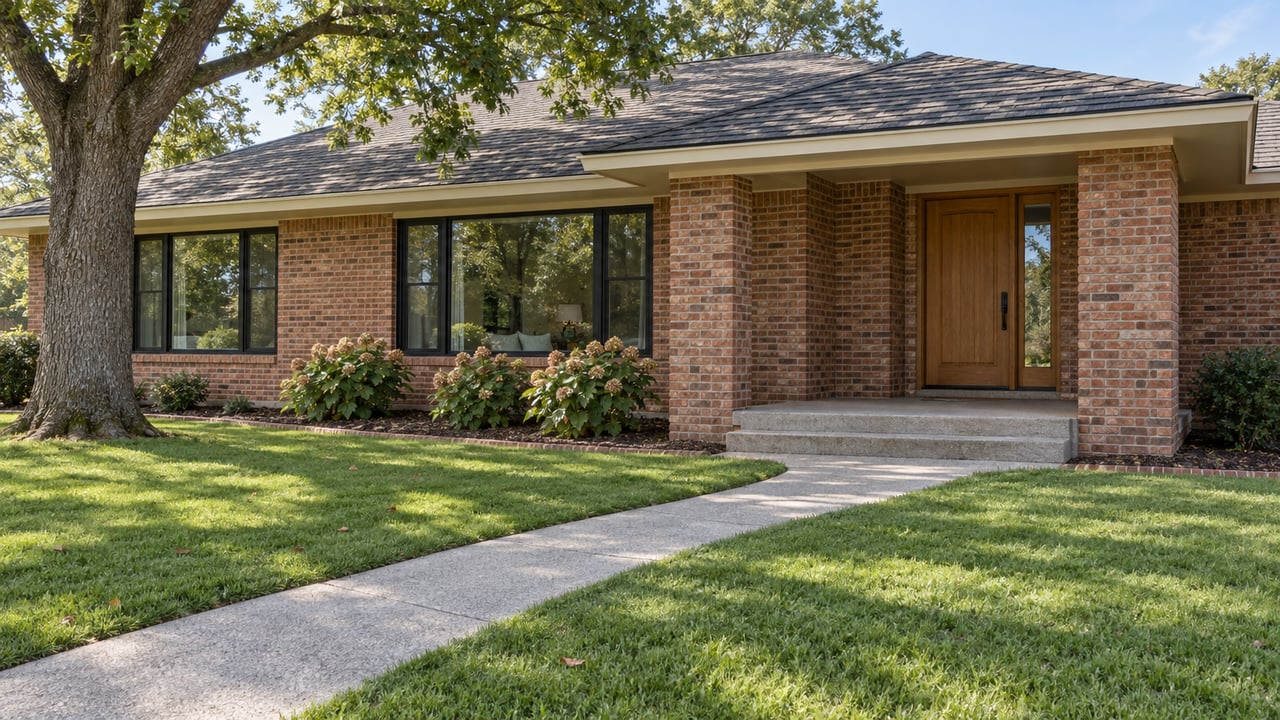
Ranch homes are known for simple, horizontal design and easy day-to-day living. National Park Service guidance describes the ranch house as a long, low suburban home with zoned interiors, open family living areas, picture windows, sliding-glass doors, porches, and patios. In practical terms, that often means a layout that keeps most living functions on one main level.
In Crestwood, many ranch homes reflect that mid-century formula on a modest suburban scale. Recent local listing examples include a 1956 ranch with 1,028 square feet on a 7,501-square-foot lot and a 1955 ranch with 1,405 square feet on a 7,566-square-foot lot. Another example sits on a 9,962-square-foot lot and was built in 1957.
Those examples suggest a pattern buyers often see in Crestwood. Many ranches offer straightforward footprints, practical room counts, and lots that are often around 7,500 to 10,000 square feet. If you want simpler one-level living and a house that may feel more approachable in size, a ranch may be a strong option.
A ranch can feel easy to live in because the main spaces are typically all on one level. That setup can make furniture placement, daily routines, and future update plans feel more straightforward. It also tends to create a natural connection between living areas, outdoor spaces, and the backyard.
Many buyers also like the flexibility of the original mid-century bones. Picture windows, patios, and open living spaces can support both careful restoration and thoughtful modernization. In Crestwood, that balance between original character and updated function is often part of the appeal.
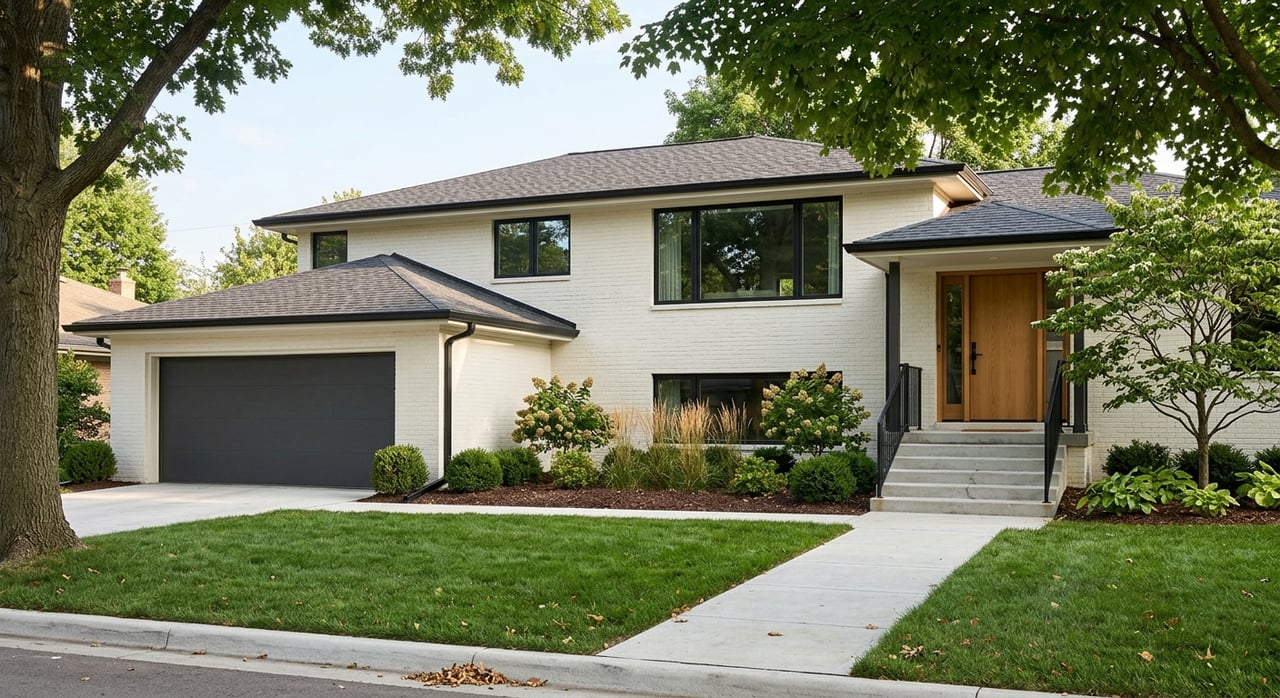
Split-level homes are closely related to ranches, but they add more separation between spaces. National Park Service guidance describes the split-level as a three-level home with main living spaces near grade, bedrooms on an upper half-level, and a lower half-level that often includes a garage, recreation room, or extra bedrooms. Many also keep ranch-like features such as horizontal lines, low-pitched roofs, and overhanging eaves.
That design can be especially useful if you want distinct zones inside the home. The main level often handles everyday gathering, while the upper level creates separation for bedrooms. The lower level can add useful flex space without requiring a full two-story layout.
A current Crestwood split-level listing offers a good local example. This 1967 home includes 5 bedrooms, 3 bathrooms, 2,860 square feet, a 0.26-acre lot, an attached basement-entry garage, and a finished lower level with a family room, fireplace, bar, laundry room, and extra bedroom. That helps show why split-level homes can appeal to buyers who want more usable lower-level space and clearer separation between public and private areas.
Split-level homes can work well if you want more room to spread out. The staggered floor plan often creates separate areas for relaxing, sleeping, storage, and hobbies. That can make the home feel more functional, especially if you want flexible space without jumping to a much larger footprint.
Some buyers also prefer the way split-levels divide activity. You may find it easier to keep gathering spaces apart from quieter rooms. If that kind of layout matters to you, a split-level may be worth a closer look.
Both home styles are common in Crestwood because they fit the city’s mid-century suburban buildout. The better choice often comes down to how you want to live in the home day to day. One style is not better than the other across the board.
| Feature | Ranch | Split-Level |
|---|---|---|
| Typical layout | Mostly one-level living | Multiple staggered levels |
| Everyday flow | Simple and direct | More separated spaces |
| Stairs | Fewer interior stairs | More stair use |
| Lower-level living | May be more limited | Often more usable lower-level space |
| Best fit for | Buyers seeking simplicity | Buyers wanting flexibility and separation |
If you value convenience and a more compact layout, a ranch may suit you best. If you prefer extra room separation and lower-level versatility, a split-level may offer more of what you need.
In Crestwood, many ranches and split-levels date to the 1950s and 1960s, so condition matters just as much as layout. During a showing, it helps to look beyond paint colors and staging and focus on how the home has aged. Strong original bones can be a real advantage, but you still want to understand what updates may be needed.
For split-levels, pay close attention to stair flow and lower-level condition. Since lower levels often include garages, recreation rooms, or extra bedrooms, you should check for water intrusion, musty odors, and whether the transitions between levels feel comfortable for your daily routine. A layout that looks good on paper should also feel easy to use in person.
For both ranches and split-levels, sewer questions deserve a spot on your checklist. Crestwood has a sanitary sewer lateral program that covers repairs to the lateral line between the home foundation and the MSD main line. That makes sewer-scope questions and available documentation especially practical when you are evaluating an older home.
One of the biggest advantages of buying a mid-century home is the opportunity to personalize it over time. In Crestwood, many buyers look for homes with intact original design features and enough lot space to support future updates. That can make these homes appealing whether you want light cosmetic changes or a more substantial remodel.
At the same time, some parts of Crestwood are especially sensitive to design changes. Ridgewood is one key example. The city notes that Ridgewood includes more than 250 homes designed by local architect Ralph Fournier and built by Burton Duenke in the early 1950s, and it is recognized as a strong example of Mid-Century Modern design.
Because of that, buyers should think carefully about how update plans fit the home’s original character. City discussions around Ridgewood design guidelines have emphasized features such as low-slope gable roofs, wide roof overhangs, non-centered front doors and windows, and a maximum two-story height. If preserving mid-century style matters to you, or if you are considering major changes, this context is worth understanding before you buy.
If you are planning renovations, make sure you build permitting time into your expectations. Crestwood states that structural changes and alterations to plumbing, mechanical, or electrical systems require a zoning review permit. Removing walls or framing also requires a demolition permit before work begins.
That means your purchase decision should account for more than the listing price. You also want to think about project scope, timeline, approval requirements, and whether the home’s existing layout supports the updates you have in mind.
If you are buying an older home in Crestwood, lead paint should be part of your planning. Because many local homes were built before 1978, the EPA says lead-based paint is more likely in older housing. The agency also notes that 24% of homes built from 1960 to 1978 contain some lead-based paint.
This does not mean every older home is a problem. It does mean that if you plan sanding, scraping, window replacement, or wall removal, you should assume lead-safe work practices may be needed. If renovation is part of your plan, this is one more reason to evaluate the home carefully and ask the right questions early.
Crestwood’s market remains active for well-presented homes. A Redfin snapshot for May 2026 shows a median sale price of $350,290, with homes averaging 9 days on market. That pace suggests buyers should be ready to move when a well-maintained ranch or split-level hits the market.
It also reinforces why details matter. Homes with clear upkeep, thoughtful updates, and strong original character can stand out quickly. Whether you are buying your first home or looking for your next move, it helps to have a local advisor who can spot value, identify red flags, and help you act decisively.
When you compare ranches and split-levels in Crestwood, try to focus on how the house will support your life over the next several years. Think about your comfort with stairs, how much separation you want between living and sleeping areas, and whether you want extra lower-level flexibility. Also consider how much updating you are prepared to take on after closing.
The best opportunities in Crestwood often come from homes with solid original bones, documented permit history, and lot sizes that give you room to improve the property over time. If you evaluate layout, condition, and renovation potential together, you can make a much more confident decision.
If you are thinking about buying or selling in Crestwood, working with an experienced local advisor can make the process feel a lot clearer. For personalized guidance on Crestwood ranches, split-levels, and the broader South County market, schedule a free consultation with Amy Prusinowski.
Looking to buy, sell, or just have a question? I'm always available to help and would love to work with you.
AMY PRUSINOWSKI
4850 Lemay Ferry Rd St. Louis MO 63129