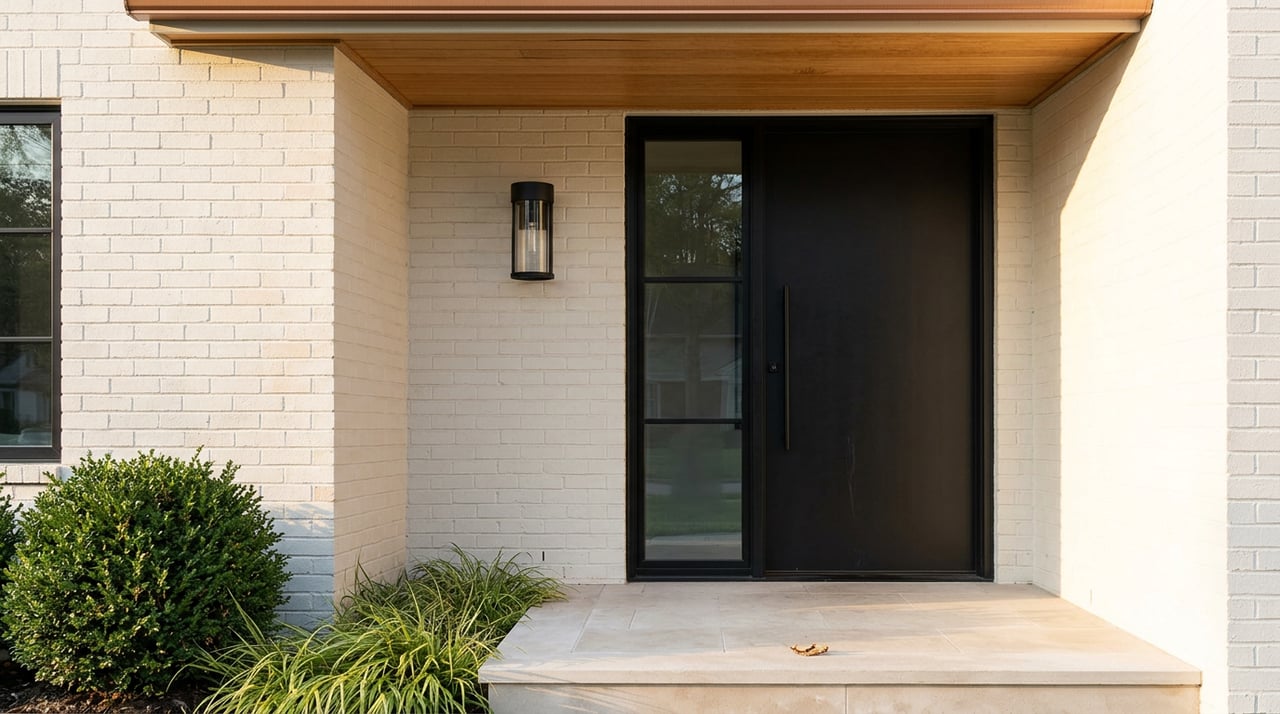
Kirkwood Home Prices: Downtown vs. the Citywide Median
September 10, 2026
September 10, 2026
Pull up almost any listing site this week and Kirkwood's median home price sits somewhere between $465,000 and $482,000, depending on which three-month window you check. That number feels like a starting point you can work with. Then you walk two blocks from the Amtrak station, past the farmers market, into the historic district north of downtown, and the listings you actually want start well north of $700,000. The last handful of tracked sales inside that walkable core put the median close to $825,000, a figure so thinly traded that it can sit unchanged for months at a stretch.
That gap is not a rounding error and it is not simply "walkability costs more," though it does. It is the first clue that Kirkwood is not one housing market wearing one median. It is two markets, sharing a city limit sign, that behave completely differently, and the smaller of the two is thin enough that its price can swing hard based on which handful of houses happened to close that quarter.
If you are shopping Kirkwood by median price alone, you are reading a number built mostly from the second market while trying to buy into the first.
The broader Kirkwood market, the postwar ranches, the mid-century subdivisions, the newer infill scattered through established blocks, trades in real volume. When over a hundred homes close in a typical month, a median built from that pool is stable. One unusual sale barely nudges it.
The walkable downtown core does not have that luxury. It is roughly sixteen blocks bounded by history, a train line, and a lot of homes that simply are not for sale in any given quarter. When only a few properties close there in a season, each one carries outsized weight. A single estate sale, a single high-end renovation, a single modest bungalow that happens to trade can shift the "downtown median" by tens of thousands of dollars in either direction.
That is a different kind of number than the citywide figure, and it deserves a different kind of trust. It tells you buyers paid real premiums for that pocket of Kirkwood in the sales that closed. It does not tell you the premium is a fixed, predictable percentage you can bank on for your specific search, and it doesn't guarantee the number reflects last month rather than a sale from much earlier in the year.
If the walkable core is so scarce, why doesn't more for-sale single-family supply show up there? The short answer is that it mostly can't, not through new subdivisions. There is no open land left inside the historic grid. For-sale single-family homes in the core mostly enter the market by replacing an old one, and Kirkwood just spent the better part of a year showing how hard that fight can get.
In May 2025, new owners of a two-story Italianate house at 751 N. Taylor Avenue, built in 1858 and known locally as the Marquitz-Garesche House, filed for a demolition permit. Under the city's landmark ordinance, the Landmarks Commission can delay a demolition for up to 270 days while it looks for alternatives, but once that window closes without a formal denial, the city has no further power to stop it. That 270-day clock ran out on February 23, 2026, with the commission having taken no action either way
Resident Erin Mariscal had already started a petition to save the house. By the time neighbors filed a lawsuit and sought a restraining order that same week, it had gathered more than 1,500 signatures. Councilwoman Nancy Luetzow called the likely demolition "extremely unfortunate," according to St. Louis Magazine. The lawsuit was dismissed in April 2026 after a judge found the residents lacked standing. On the morning of May 6, 2026, crews demolished the house. According to First Alert 4, neighbor Ellen Smith, watching it happen, said she felt "kind of gut-punched."
The petition had passed 2,000 signatures by then. It didn't matter. That is the mechanism in miniature: even a landmarked, actively maintained 1858 home inside a National Register historic district came down. If a home with that much protection and that much public support still came down, the walkable core is not going to add for-sale single-family supply the easy way. For-sale single-family supply is added largely through contested teardown-rebuilds, which keeps it structurally tight no matter how strong demand runs.
| Downtown / Walkable Core | Rest of Kirkwood | |
|---|---|---|
| Median sale price | Near $825,000, from a small, infrequently updated sample | $465,000 to $482,000 across a much larger sample |
| Typical housing stock | Pre-1900s Victorians, Craftsman bungalows, condos and townhomes | Postwar ranches, mid-century builds, scattered newer infill |
| How new supply enters | Teardown-rebuild on an existing footprint, or redevelopment of a rare large parcel | Occasional infill lots throughout established neighborhoods |
| Recent example of added supply | The former city Public Works site, now planned as a roughly 202-home community connected to downtown | Individual teardown-rebuilds spread across many separate blocks |
The right column moves the citywide median. The left column is where most buyers searching "walkable," "historic," or "walk to the train" actually want to be, and it is not the market the citywide number describes.
Kirkwood's own planning department has been open about the imbalance. The city's Attainable Housing Study, completed in 2023, found that in the five years before its release, single-family homes made up 94 percent of all new housing built in Kirkwood, with multifamily development almost entirely absent since 2005. The city's Downtown Master Plan, finalized in 2021, set out to change that by concentrating new apartment and condo construction downtown instead.
That plan is visibly working, just not in the way that helps a buyer looking for a for-sale house near the train station. Planner Jonathan Raiche told First Alert 4 that the goal is to keep downtown "staying relevant and keeping up with the times" by pairing commercial growth with more residential density nearby. The result so far has been apartment buildings like The James on South Kirkwood Road and new condo projects, which add housing units downtown but add them as rentals or condos, not as the single-family inventory that actually competes with what a house-hunting family is trying to buy.
Meanwhile the physical draw of that core keeps getting stronger. The city's restoration of the 1893 Kirkwood Train Station, a Richardsonian Romanesque depot on the National Register of Historic Places, is on track to reach substantial completion this September, with a new roof, restored stonework, and a rebuilt passenger canopy. That kind of investment doesn't shrink demand for the surrounding blocks. It reinforces exactly why the walkable core trades at a premium that the rest of the city's inventory was never built to match.
If you are house-hunting in Kirkwood, the citywide median is a reasonable starting point for the ranch-and-subdivision market that makes up most of the city. It is close to useless for setting expectations inside the walkable core. A few things worth doing instead:
If you're selling a home inside the core, the thinness that inflates the median in your favor can also work against you. With so few comparable sales, an appraiser or a cautious buyer's agent may lean on citywide data that undervalues what you're offering. Pricing a scarce property well takes someone who can build the case for that specific pocket, not just pull a citywide report.
Is the downtown premium going to keep growing? Nothing about the supply mechanism has changed. For-sale single-family homes in the core still mostly enter through contested teardown-rebuilds, and demand pressure from the train station restoration and downtown redevelopment isn't easing. There is no structural reason to expect the gap to narrow soon.
Do the new downtown apartments help buyers looking for a house? Not directly. Projects like The James and the planned redevelopment of the former Public Works site add rental and condo units, which matters for the city's housing mix, but they don't add the for-sale single-family inventory that most buyers searching "walkable Kirkwood" actually want.
Does the train station restoration affect nearby home values? It's reasonable to expect it will reinforce demand rather than change it. A newly restored, historically significant depot at the center of the walkable core adds to the draw that already makes that pocket scarce. It doesn't create the land needed to relieve that scarcity.
If you're weighing a move into Kirkwood, or trying to price a home that sits inside its walkable core, the number on the portal is only the beginning of the conversation. Amy Prusinowski has spent nearly three decades reading exactly this kind of local nuance into pricing strategy for St. Louis County sellers and buyers. Schedule a free consultation to talk through what your specific block, and your specific goals, actually call for.
This article is general information, not legal, tax or financial advice. Consult a qualified professional about your situation.
Looking to buy, sell, or just have a question? I'm always available to help and would love to work with you.
AMY PRUSINOWSKI
4850 Lemay Ferry Rd St. Louis MO 63129